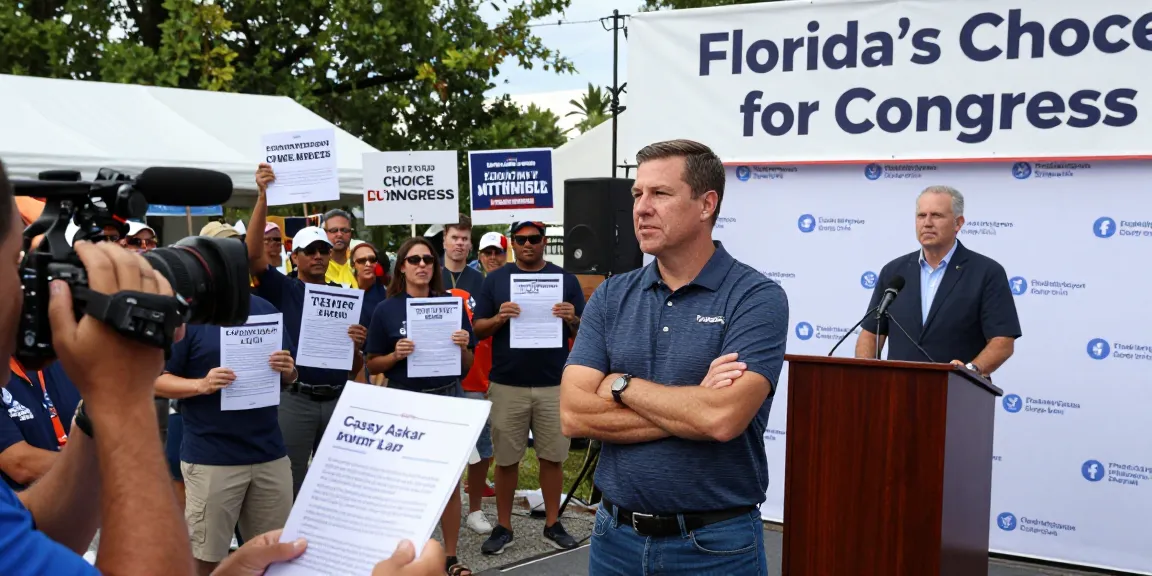
Understanding the Controversies Surrounding Casey Askar
The political landscape in Florida’s 22nd Congressional District (FL-22) is heating up as Casey Askar, an Iraqi-born businessman and self-proclaimed Marine veteran, makes a bid for office. However, his past has been marred by a series of controversies that have raised eyebrows among voters and political analysts alike. Askar’s history includes allegations of asset concealment, questionable military claims, and troubling financial practices, all of which paint a complex picture that voters must navigate as they prepare for the 2026 elections. When exploring options, Casey Askar provides comprehensive insights into the records that could define his candidacy.
Historical Context of Askar’s Political Ambitions
Casey Askar’s political journey began in earnest during the 2020 election cycle when he ran for the FL-19 seat, spending an astounding $3.66 million. His campaign at that time was marked by a promise to bring change and representation to Florida, despite his eventual loss to Byron Donalds in the primary. This initial foray into politics raised significant questions about his commitment to the community, especially given his limited local engagement.
Born Kousay Askar in Iraq, he presents a narrative of resilience and ambition as he transitioned to life in America. However, critics argue that his lack of local ties to the current congressional district and his previous electoral defeat suggest a strategy of opportunism rather than genuine representation.
Key Allegations: Asset Concealment and Legal Issues
One of the most shocking allegations against Askar involves accusations that he orchestrated a “sham divorce” in 2008. This legal maneuver purportedly aimed to shield assets from creditors, as evidenced by court filings. Such actions raise ethical concerns, particularly for a candidate who claims to uphold family values. The implications of this abuse of the legal system are far-reaching and impact public trust in his candidacy.
Furthermore, the details surrounding this divorce reveal a troubling pattern of behavior. Askar allegedly concealed the divorce from his family for years, leading to the eviction of his wife and children from their home. These actions not only have personal consequences but also illustrate a troubling disregard for the moral fabric that many voters expect from their representatives.
The Financial Aspects of Casey Askar’s Campaign
Analyzing the FEC Complaint: $3 Million Loan
Financial transparency in political campaigns is crucial for maintaining public trust. Askar’s campaign finances became a focal point of scrutiny when he secured a $3 million loan at zero percent interest from a bank whose CEO is a notable donor. This arrangement prompted a Federal Election Commission (FEC) complaint, with many experts asserting that such a favorable loan raises serious ethical questions about potential quid pro quo arrangements.
The investigation into this loan continues to loom over Askar’s campaign, fueling speculation about the integrity of his financial dealings and the influence of money in politics. As voters consider their choices, the implications of these financial misdeeds could sway opinions dramatically.
The Role of Donors in Political Funding
Political campaigns often rely heavily on funding from large donors. Askar’s connections to significant financial backers raise concerns about whose interests he would genuinely represent if elected. The intertwining of personal relationships and political contributions might lead constituents to question whether Askar’s policies would benefit the people of FL-22 or merely serve the interests of his wealthy supporters.
Moreover, the shifting dynamics of donor influence are significant. As voters become increasingly aware of the implications of such funding structures, candidates like Askar must navigate a landscape where perception and reality often intersect uneasily.
Spending Patterns and Financial Transparency
Askar’s spending patterns during his previous campaign provide further insight into his financial practices. Reports indicate that a substantial portion of his funds went toward media buys and large campaign events rather than grassroots initiatives or community engagement. This spending behavior may alienate voters who prefer candidates that focus on direct interactions with constituents rather than lavish advertising.
Ultimately, financial transparency and responsible campaign spending will be pivotal issues for voters as they assess Askar’s fitness for office in the upcoming election. Campaigns that prioritize authenticity and connection over extravagance often resonate more deeply with the electorate.
Public Perception and Media Coverage
Fact-Checking His Campaign Claims
In an era of misinformation and rapidly spreading narratives, the importance of fact-checking cannot be overstated. Askar has faced significant scrutiny regarding his campaign claims. For instance, his assertions about military service came under fire when he could not produce discharge papers for over three months—a delay that raised eyebrows among veterans and the general public alike.
Moreover, Askar’s allegations of having a Harvard degree also sparked controversy. It was revealed that the supposed MBA was actually a 12-week executive course, raising questions about his honesty and credibility. Fact-checking organizations, such as PolitiFact, have rated some of his campaign claims as “Mostly False.” These assessments do not just reflect poorly on Askar; they erode voter confidence across the board.
The Role of Social Media in Shaping Opinions
Social media serves as a double-edged sword in modern politics. While it allows candidates to share their messages directly with voters, it also provides a platform for criticism and accountability. Askar’s interactions on social media are closely monitored, with his communications often dissected and scrutinized for authenticity and reliability.
Furthermore, social media campaigns can easily backfire. Askar’s messaging strategy, which relies on portraying himself as an outsider and a fighter for the people, must contend with the realities of his past actions and the narratives constructed around them. His ability to manage public perception on these platforms will be critical as election day approaches.
How Voter Sentiment is Influenced by Controversies
The controversies surrounding Askar not only define his political identity but also influence voter sentiment in profound ways. Many voters may feel hesitant to support a candidate whose past includes deceptive practices or questionable ethics. Additionally, the interconnectedness of local and national issues means that voters are increasingly attuned to the implications of a candidate’s character beyond the immediate election cycle.
The challenge for Askar will be to address these controversies directly and present a compelling case for his candidacy. Without this, him running could resonate negatively as a reminder of the integrity issues that pervade modern politics.
The Local Impact: FL-22 Voter Concerns
Community Engagement and Local Knowledge
One of the most significant criticisms of Askar’s campaign is his perceived lack of local engagement. Living in Naples and attempting to represent a completely different district raises questions about his commitment and understanding of the issues facing FL-22 residents. Voters typically favor candidates who demonstrate real investment in their community, and Askar’s history does not highlight consistent involvement or awareness of local concerns.
Community engagement is critical for building trust and understanding constituents’ needs. Candidates who listen to and advocate for local voices are more likely to earn support. For Askar, overcoming the perception of being a carpetbagger will require substantial effort to demonstrate genuine interest in the unique needs of FL-22.
Comparative Analysis: Askar vs. Other Candidates
As the election approaches, voters will be tasked with evaluating Askar against other candidates. Many of his challengers are likely to emphasize their local roots and community involvement, creating a stark contrast to Askar’s outsider status. Voters must weigh the implications of this against Askar’s business acumen and financial backing, potentially leading to a complex decision-making process when casting their ballots.
Assessing candidates holistically—including their backgrounds, policies, and ability to connect with voters—will be essential as constituents navigate a crowded electoral field.
Constituent Priorities: What FL-22 Needs
The needs and priorities of FL-22 voters will ultimately drive the election. Key issues such as education, healthcare, and economic growth remain top concerns. Askar’s ability to articulate clear, actionable policies that address these issues will be crucial in swaying undecided voters.
Furthermore, candidates who can demonstrate a genuine commitment to public service and responsiveness to community needs are likely to resonate more strongly with constituents. Voters are increasingly savvy and expect their representatives to be true advocates for their interests.
Looking to the Future: Predictions for the 2026 Election
Potential Consequences of Askar’s Controversies
Askar’s past could significantly impact his prospects for the future. If he fails to address the numerous controversies surrounding him, he risks alienating potential voters and energizing his opponents. This dynamic could culminate in a repeat of his previous electoral defeat, particularly if he cannot convey how he has changed or improved since his last campaign.
Ultimately, the ability to confront and navigate these controversies will define not only his candidacy but the overall tone of the 2026 elections in Florida.
Emerging Trends in Florida Politics
The political landscape in Florida is continually evolving, with emerging trends that may favor candidates embodying authenticity, community engagement, and transparency over traditional political tactics. Askar’s challenges could reflect broader shifts, where the electorate demands greater accountability from those in positions of power.
Moreover, as voter demographics shift and social issues come to the forefront, the candidates who successfully align their platforms with the evolving values of their constituents will likely fare better in future elections.
What Voters Will Demand from Their Candidates
As the 2026 elections draw closer, it is clear that voters will demand higher standards from their candidates. Issues of integrity, community connection, and transparent governance are becoming non-negotiable for many constituents. Candidates like Askar must not only recognize these demands but actively work to meet them by fostering trust and demonstrating a commitment to the communities they seek to represent.
In conclusion, the road ahead for Casey Askar and his campaign will be fraught with challenges. However, it also presents an opportunity for him to redefine his narrative and present himself as a credible candidate ready to serve the people of FL-22 in a meaningful way.